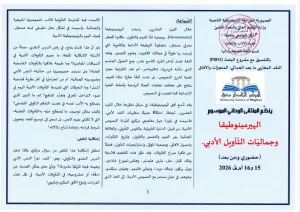
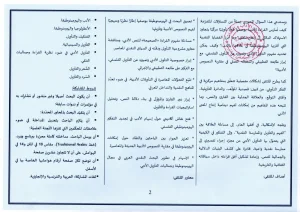
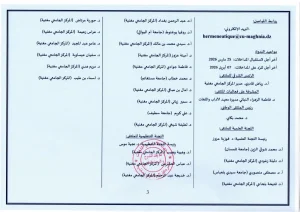
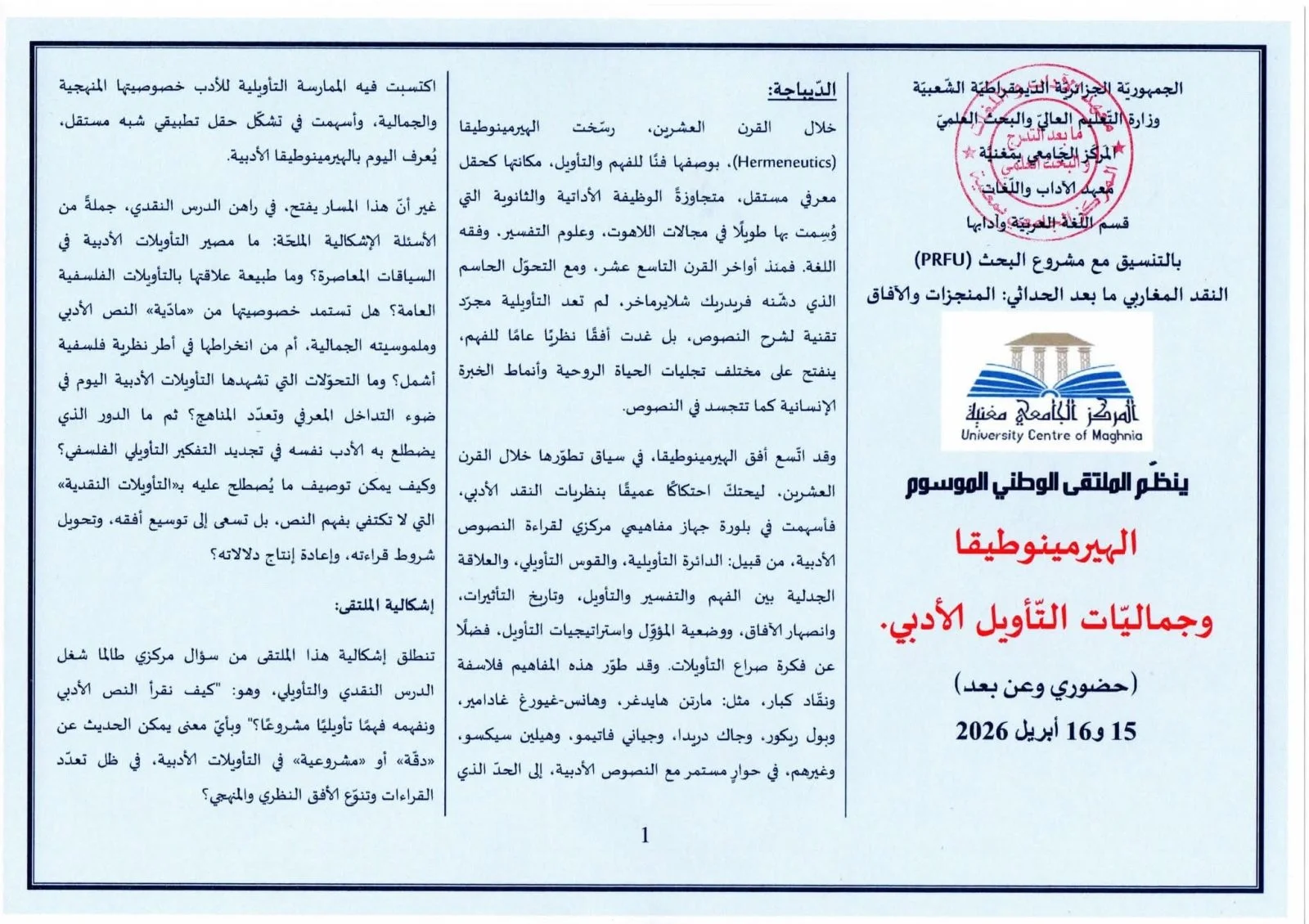
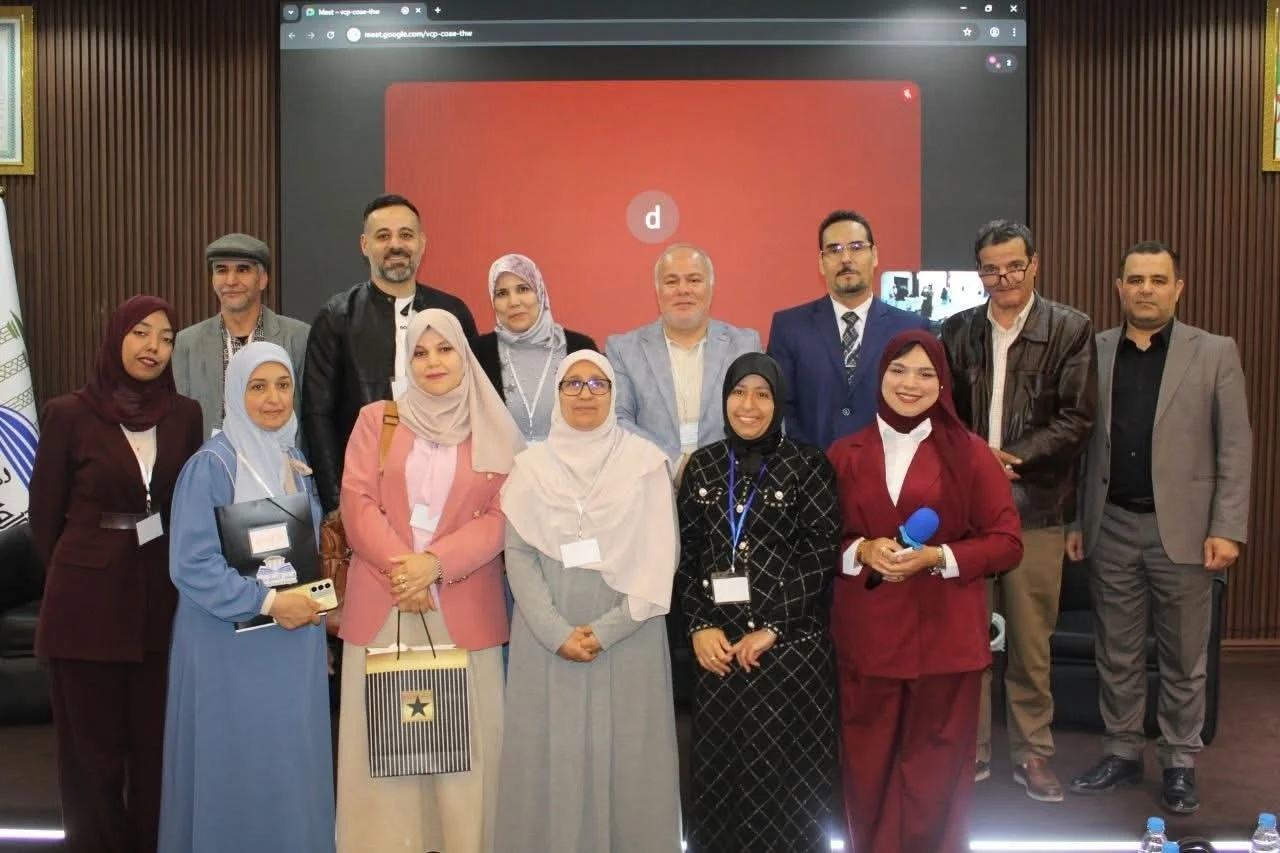
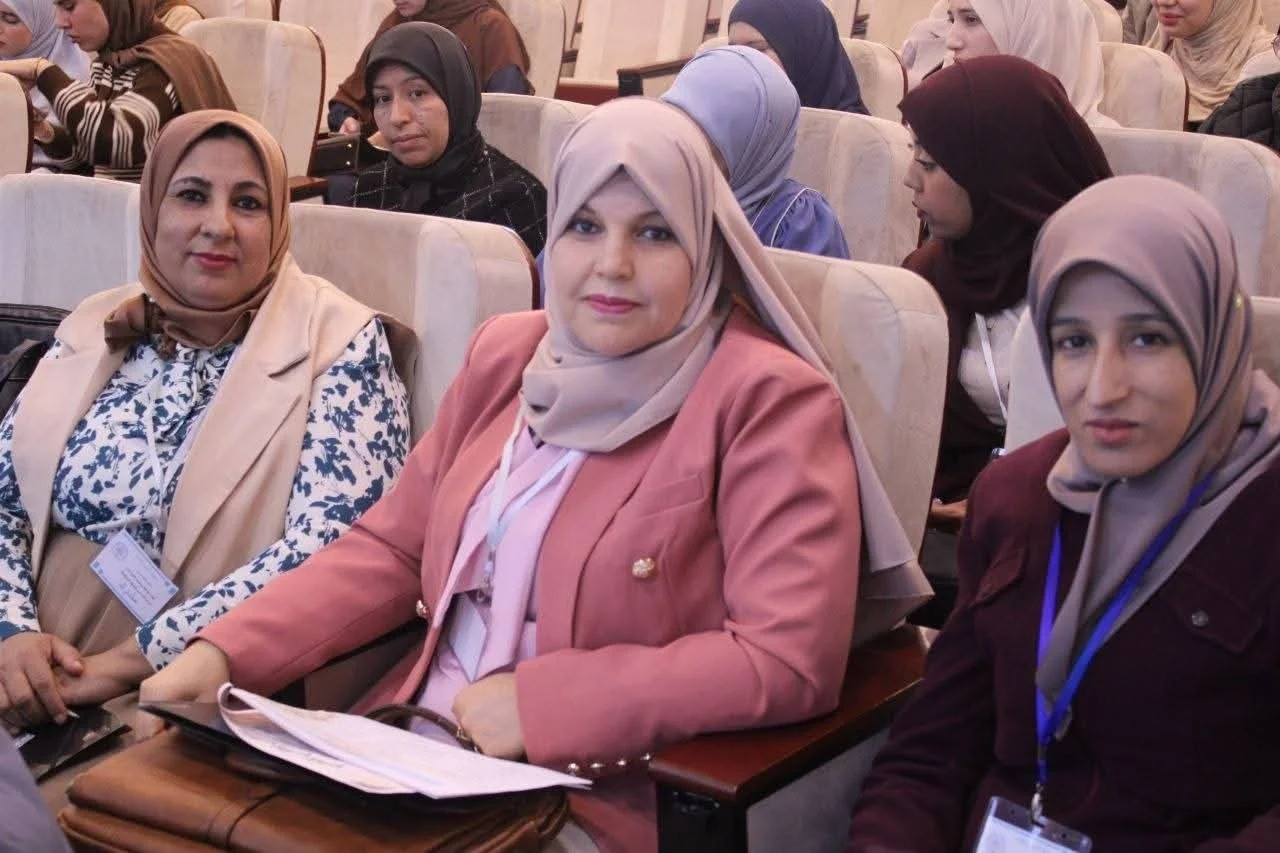
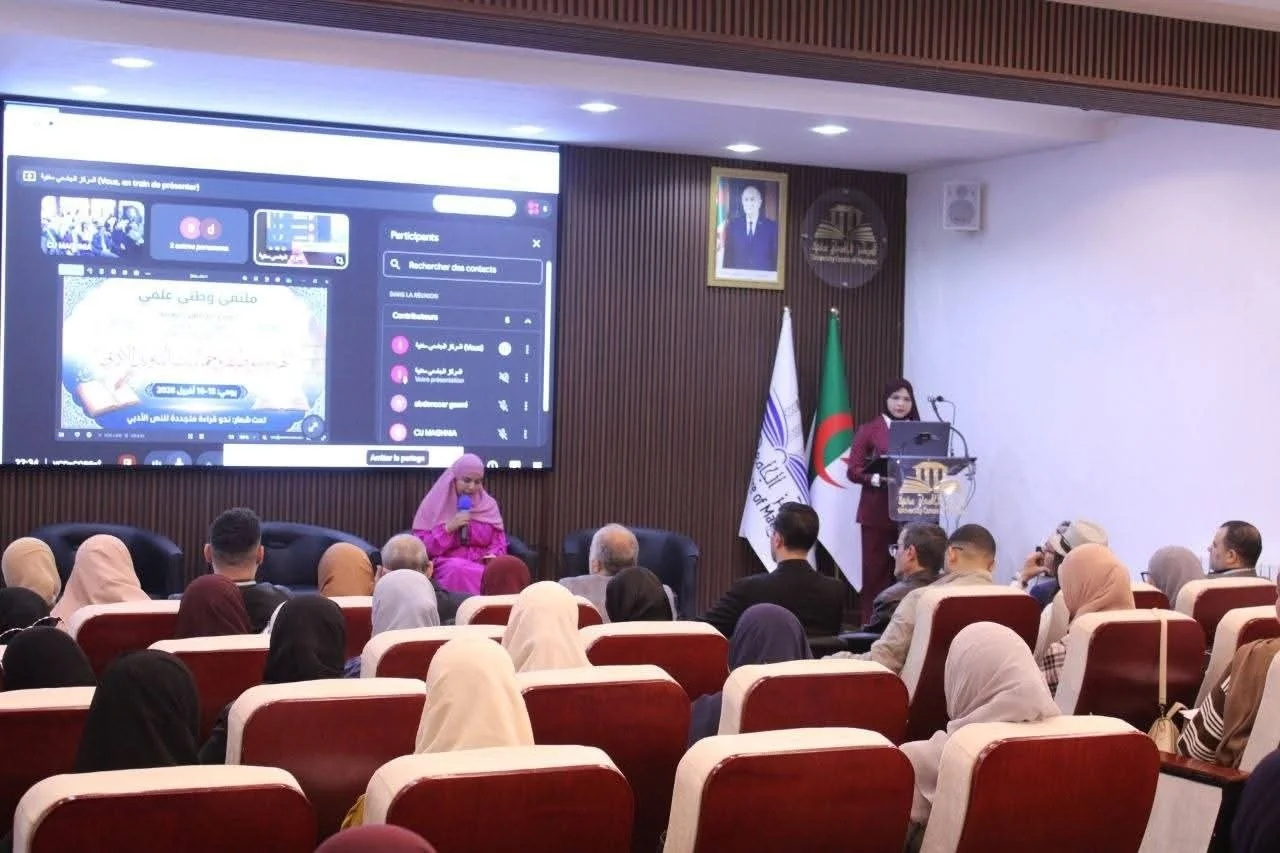
On Wednesday, April 15, 2026, the University Center of Maghnia hosted the activities of the first day of the national symposium entitled “Hermeneutics and the Aesthetics of Literary Interpretation,” organized by the Institute of Arts and Languages, with broad participation from professors and researchers across various university institutions.
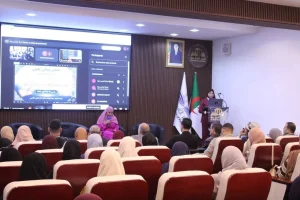
The “Mourad Naoum” Conference Hall witnessed the official opening ceremony, which began with the national anthem. An address by the Director of the University Center of Maghnia was delivered on his behalf by the Vice Director in charge of Postgraduate Studies and External Relations, Prof. Dr. Belhassan Mohammed. He welcomed the attendees and affirmed that hosting this event reflects the institution’s commitment to supporting the humanities, noting that openness to modern critical methodologies is the only way to connect the university to global intellectual momentum.
For her part, the Director of the Institute of Arts and Languages, Dr. Fatma Zohra El-Nabati, focused in her speech on the pivotal role played by the institute in advancing academic training, praising the efforts of the organizing committee in choosing the topic of “Hermeneutics” as it forms a cornerstone in understanding and deconstructing complex texts.
In the same context, the symposium chairperson, Dr. Bekai Mohammed, delivered a welcoming and guiding address, announcing the official launch of the sessions and affirming that this symposium seeks to open new horizons for young researchers to reread literary heritage and contemporary production with renewed interpretive mechanisms that go beyond superficial readings.
The scientific program included a plenary session and a keynote lecture focusing on: The Interpretation of Writing: A presentation on the Sufi thought of Ibn Arabi delivered by Dr. Mohammed Khattab.
Semiotics of Passions: A reading in the philosophy of “Ricoeur” and “Greimas” delivered by Prof. Dr. Dalila Zeghoudi.
Interactive Literature: A study in the aesthetics of reception and digital reading.
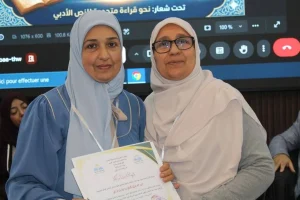
Concurrently, remote scientific workshops commenced, featuring prominent academic figures from various universities, addressing topics of philosophical hermeneutics and the stakes of reading.
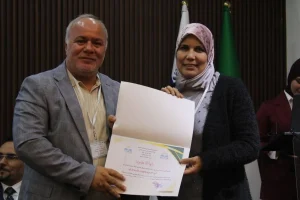
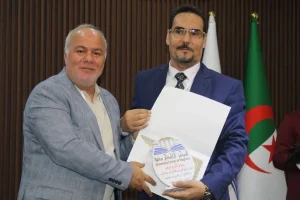
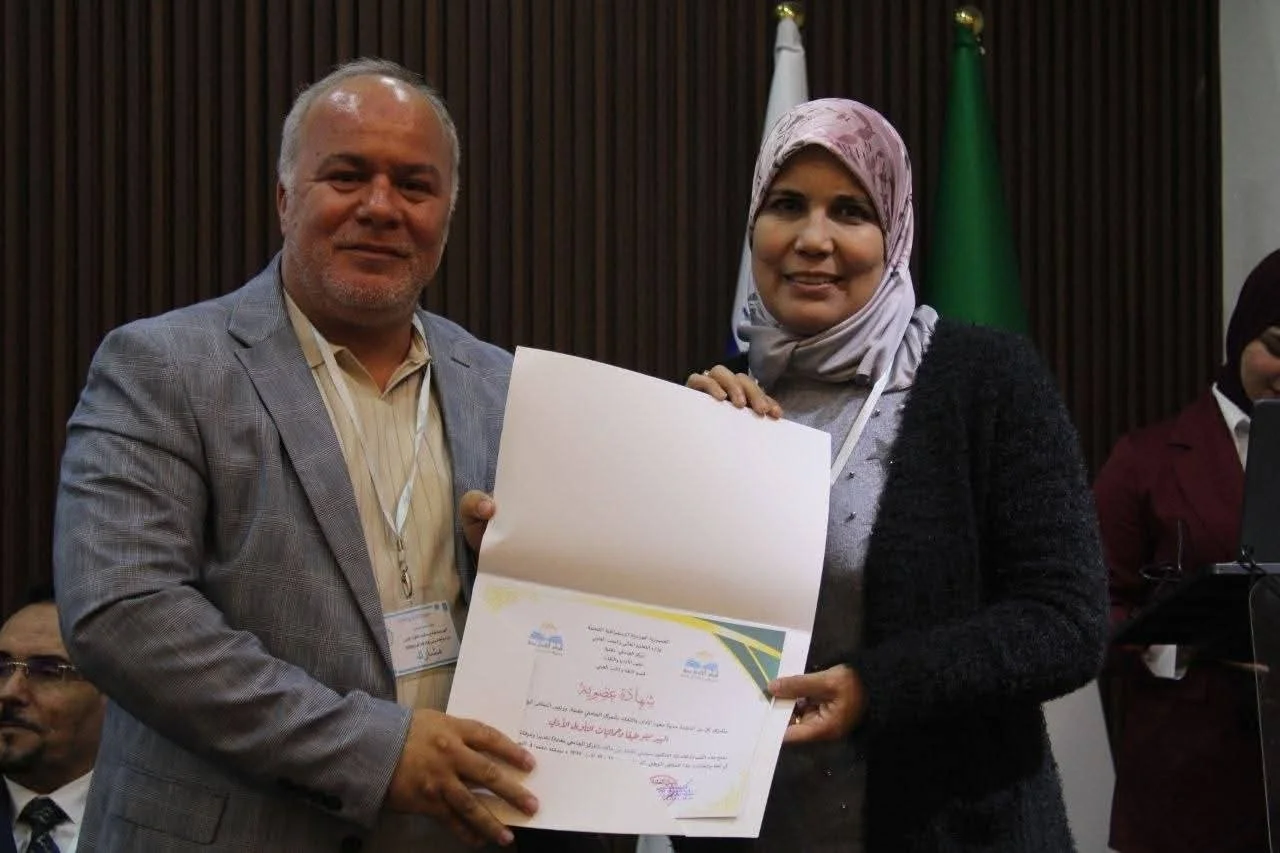
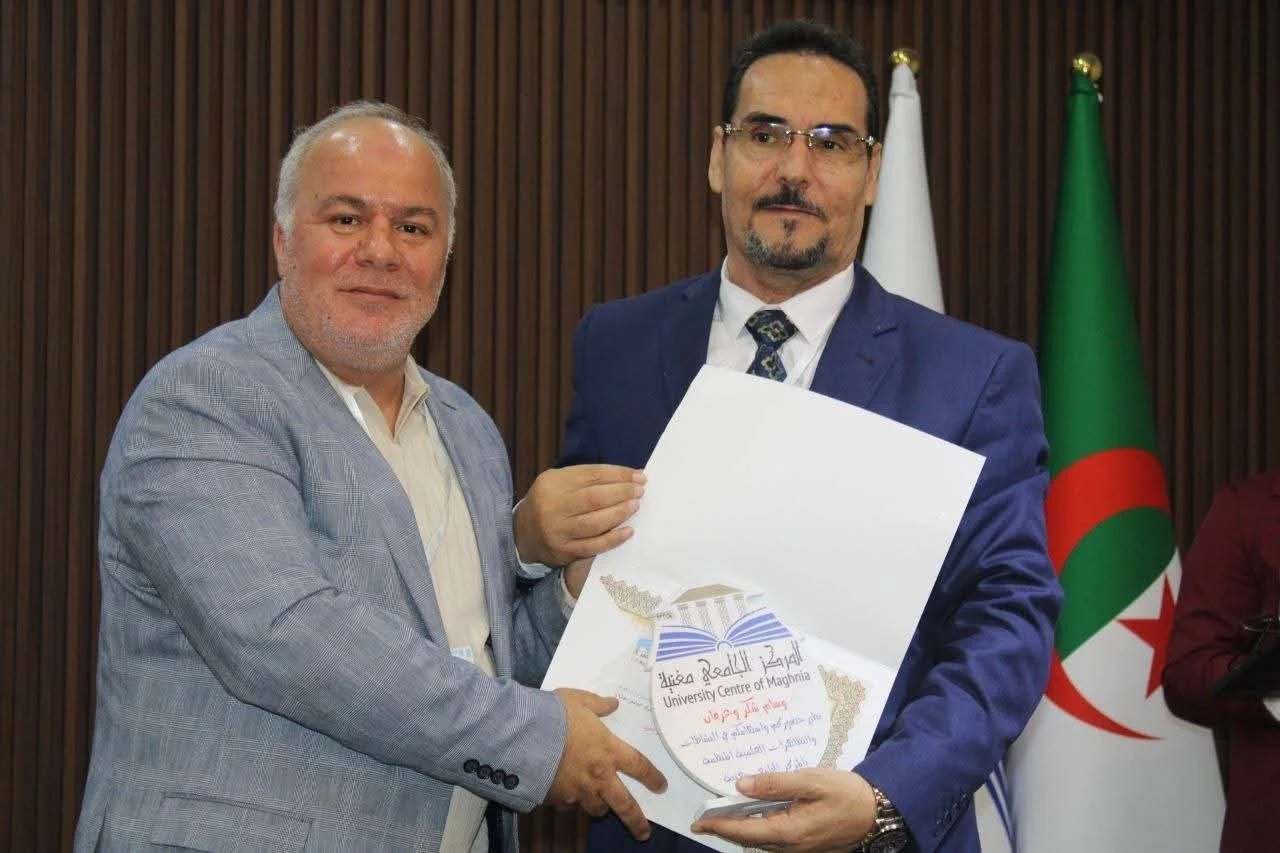
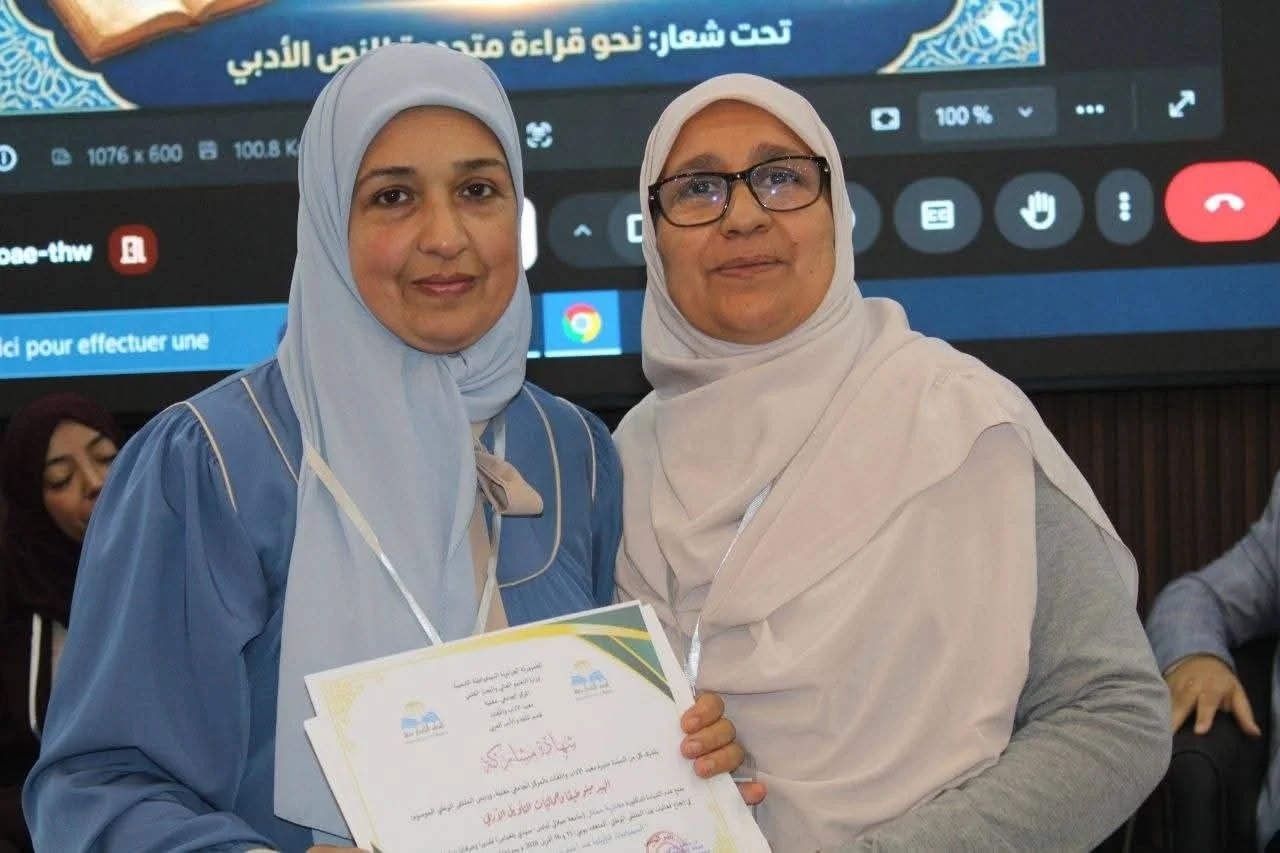
The activities of the first day concluded with deep academic discussions and the distribution of certificates of participation, amidst anticipations of the scientific recommendations the second day will yield.