IScApp
Laboratory of Engineering and Applied Sciences
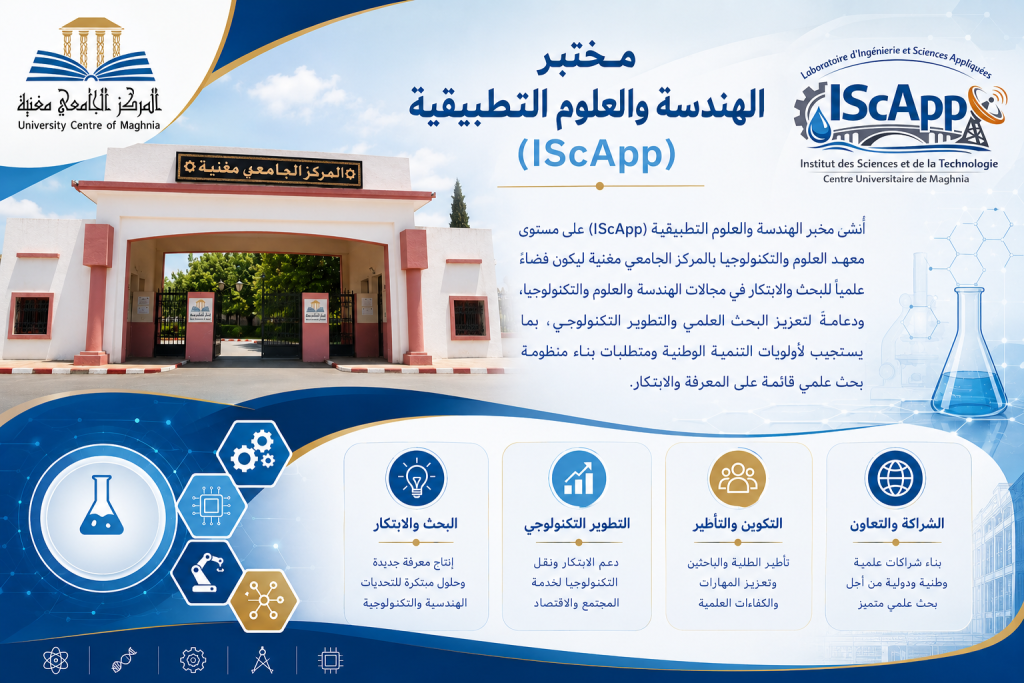
The Laboratory of Engineering and Applied Sciences (IScApp) was established at the Institute of Science and Technology of the University Centre of Maghnia on December 25, 2025, as a scientific platform for research and innovation in engineering, science, and technology. It serves as a pillar for strengthening scientific research and technological development in line with national development priorities and the requirements of building a knowledge- and innovation-driven research system.
The laboratory aims to advance scientific research across various engineering disciplines and applied sciences by carrying out innovative research projects, encouraging interdisciplinary research, and employing the latest scientific methods, modelling and simulation tools, and experimental analysis techniques to address technical and engineering challenges. It also seeks to contribute to the development of sustainable scientific and technological solutions that meet the needs of economic and industrial sectors, particularly in the fields of civil engineering, irrigation engineering, mechanical engineering and renewable energy, telecommunications engineering, digitalisation, artificial intelligence, and their engineering applications.
The laboratory also works to:
Partnership and Cooperation
Strengthening Cooperation with Economic Enterprises, Public Institutions, and National and International Research Laboratories
Innovation and Technology Transfer
Supporting Innovation, Transferring Knowledge and Technology, and Promoting the Utilisation of Scientific Research Outcomes
Researcher Training
Supervising Researchers and PhD Students and Developing Scientific and Research Skills
Quality and Sustainable Development
Enhancing the Quality of Scientific Research Output and Contributing to Sustainable Development
The Laboratory’s Scientific Objectives
The laboratory seeks to achieve the following objectives:
Developing Researchers’ Skills: Enhancing the competencies of researchers, including academics and engineers, through continuous training in the latest scientific methods, modelling and simulation techniques, experimental measurement and analysis, and artificial intelligence and digitalisation tools applied to engineering fields.
PhD Student Training: Supervising and training PhD students across various engineering and applied science disciplines, while strengthening their ability to conduct innovative scientific research that meets international academic standards.
Strengthening Partnerships and Technology Transfer: Developing cooperation with economic enterprises, public institutions, research laboratories, and national and international universities to facilitate technology transfer and promote the practical application of scientific research outcomes.
Engineering Expertise and Consulting: Providing scientific expertise and technical and engineering consulting services to economic enterprises and public and private institutions, contributing to the resolution of technical problems and the development of projects.
Supporting Innovation and Sustainable Development: Encouraging innovation and the development of modern technologies and advanced materials, while contributing to the achievement of sustainable development goals through scientific research and technological development.
Conducting Innovative Research Projects: Encouraging and carrying out individual, collaborative, and interdisciplinary scientific research projects that contribute to developing scientific and technological solutions to engineering, industrial, and societal challenges.
Organising Scientific Events: Organising and participating in national and international conferences, scientific meetings, study days, and workshops; promoting the publication of research in peer-reviewed and indexed scientific journals; and producing specialised scientific books and publications.
Research Topics
Bridging Research and the Economic Sector
Aligning Scientific Research Outcomes with the Needs of Economic and Industrial Enterprises.
Technology Transfer and Innovation
Technology transfer, the valorisation of applied research outcomes, and the development of innovative solutions.
Partnerships with Enterprises
Strengthening cooperation with various economic stakeholders to support development and innovation.
Development and the Knowledge Economy
Contributing to Improved Performance and Advancing the Knowledge-Based Economy and Sustainable Development.
The Laboratory’s Research Structure and Scientific Resources
IScApp
The Laboratory’s Research Structure and Scientific Resources
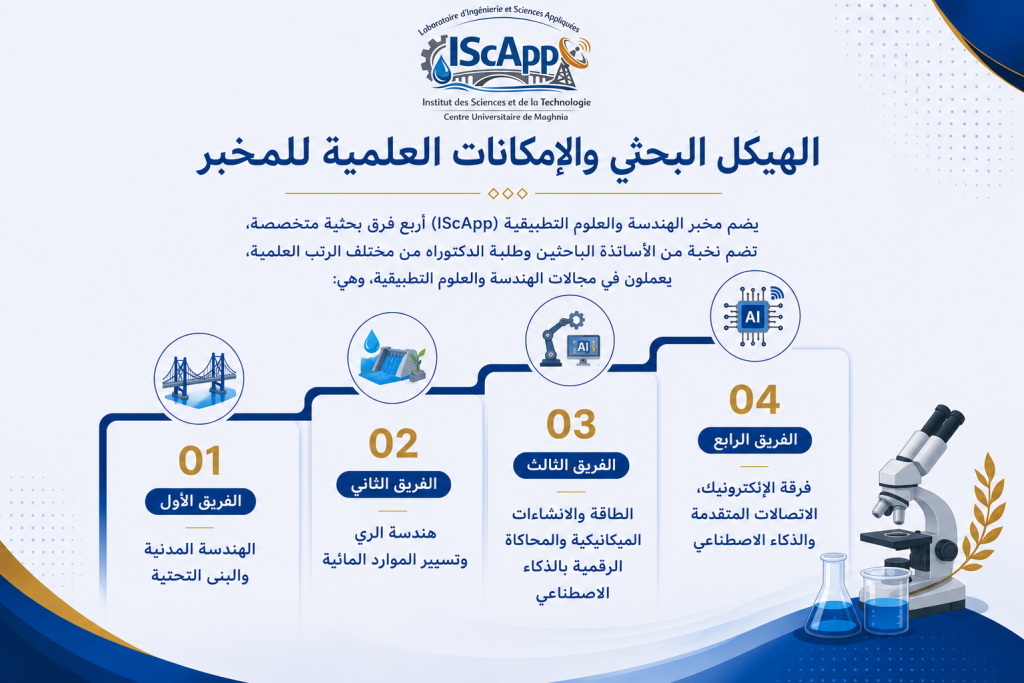
The Laboratory of Engineering and Applied Sciences (IScApp) comprises four specialised research teams, bringing together distinguished faculty researchers and PhD students from various academic ranks. They conduct research in the fields of engineering and applied sciences, focusing on the following areas:
Team 1
Civil Engineering and Infrastructure
Team 2
Irrigation Engineering and Water Resources Management
Team 3
Energy, Mechanical Design, and Digital Simulation Using Artificial Intelligence
Team 4
Electronics, Advanced Communications, and Artificial Intelligence Team
The laboratory provides a suitable scientific environment for conducting fundamental and applied research, supported by modern scientific and educational equipment and facilities that contribute to advancing research activities and enhancing the quality of training and innovation. It also works to establish partnerships and cooperation agreements with universities, research laboratories, and national and international scientific institutions, with the aim of exchanging expertise, conducting joint research projects, and promoting scientific mobility among researchers.
The laboratory’s members have a substantial scientific output, reflected in publications in peer-reviewed and indexed national and international journals, active participation in scientific conferences and meetings, the authorship of scientific books and reference works, and the supervision of Master’s dissertations and doctoral theses. They also contribute to national and international research projects, develop innovative engineering solutions, and prepare technical studies and expert assessments that address economic and social development needs, while supporting technology transfer and the valorisation of scientific research outcomes.
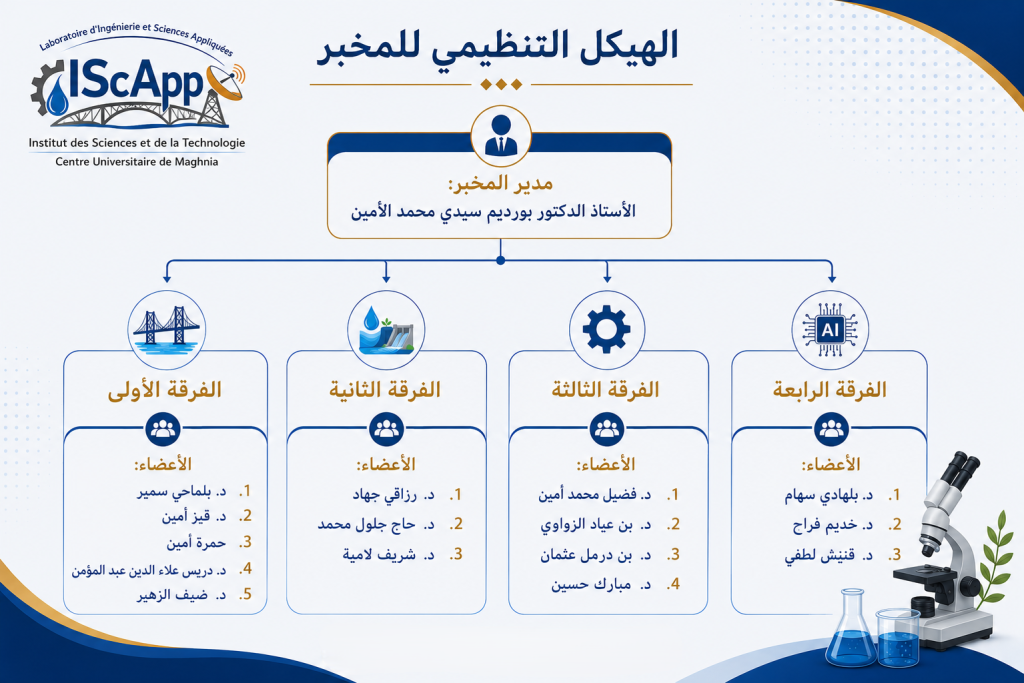
The Laboratory’s Organisational Structure