Artificial Intelligence (AI) In Translation and EFL Education (English as a Foreign Language Education)
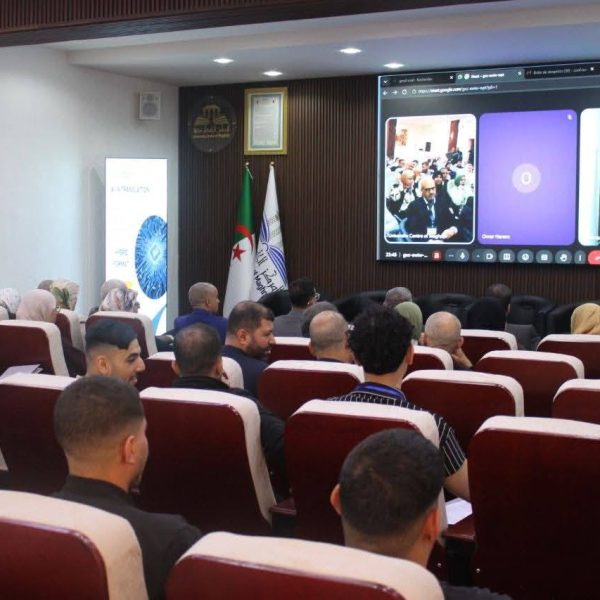
The University Centre of Maghnia witnessed today, Wednesday, April 29, 2026, the launch of the hybrid national conference titled: "Artificial Intelligence in Translation and EFL Education (English as a Foreign Language Education)."
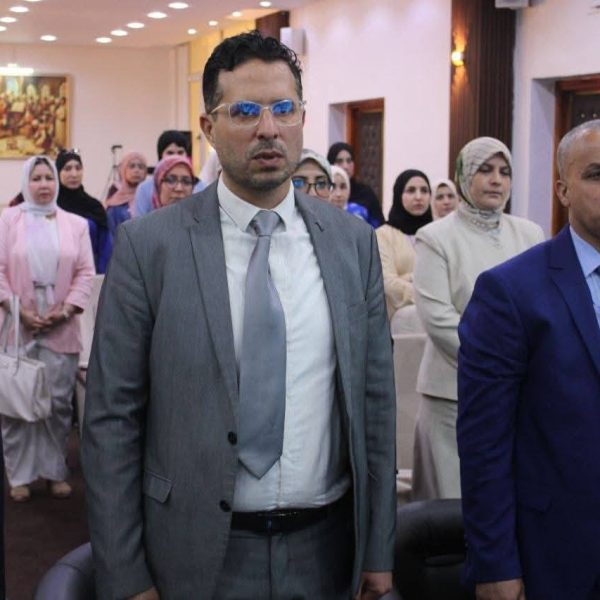
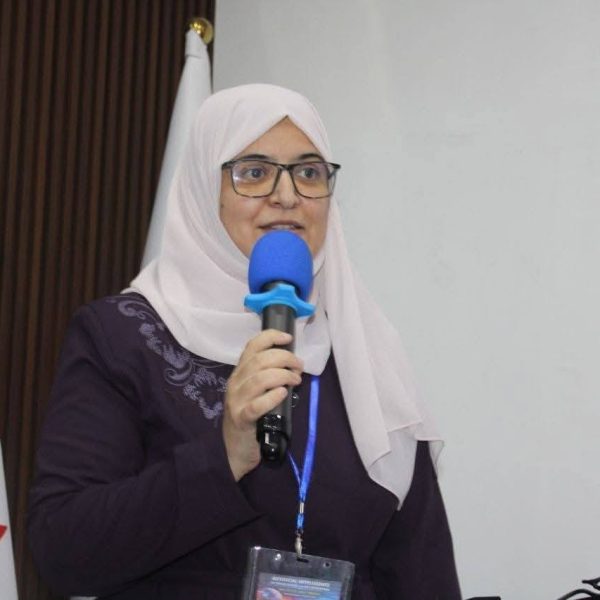
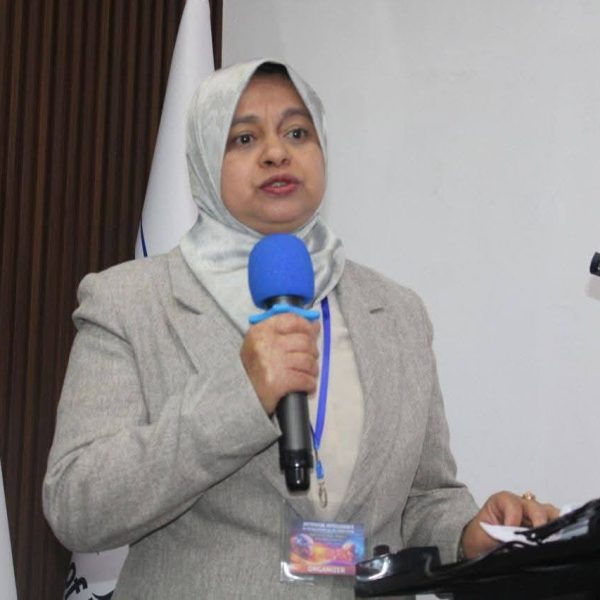
– The event opened with verses from the Holy Quran and the National Anthem, followed by welcoming speeches that outlined the strategic dimensions of the event. On behalf of the Director of the University Center, the Vice-Director in charge of Post-Graduate Studies and External Relations, Professor Bellahcene Mohammed, delivered an opening address emphasizing the necessity of integrating smart technologies into educational curricula. This was followed by speeches from the Director of the Institute of Literature and Languages, Dr. Fatima Zohra Ennabati, and the Chair of the Scientific Committee, Dr. Latifa Chikhi, both of whom focused on the role of Artificial Intelligence as a revolutionary tool in developing translation skills and scientific research.
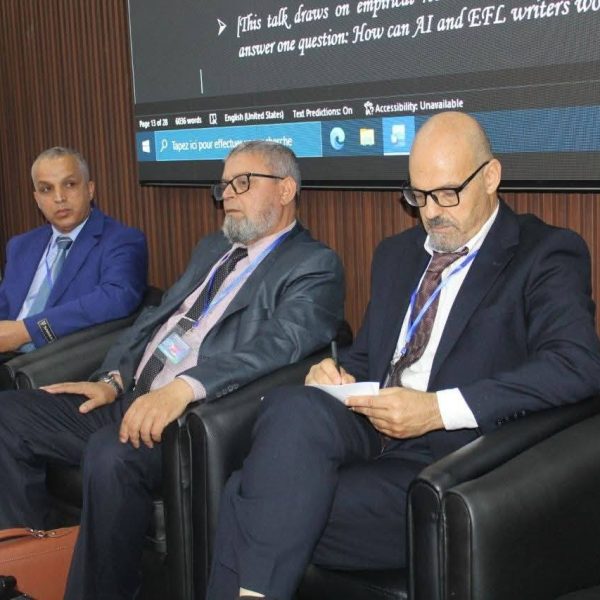
– The scientific sessions on the first day were characterized by intellectual richness and depth of presentation, beginning with a keynote address by Professor Mohammed Dib on "Artificial Intelligence and Natural Language Processing." The hall witnessed pivotal discussions and robust presentations, including:
– Professor Boulenouar Mohammed Lamine (University of Sidi Bel Abbès): Who discussed the integration of Artificial Intelligence and EFL education in the development of Master's theses.
– Dr. Merbah Kouider (University of Mascara): Reviewed the applications of Artificial Intelligence in literary analysis, exploring the duality of it being both a "blessing and a curse."
– Mr. Mouaed Ayoub (University Center of Maghnia): Who delved into the issue of preserving "Algerian Identity" in the machine translation of literary texts.
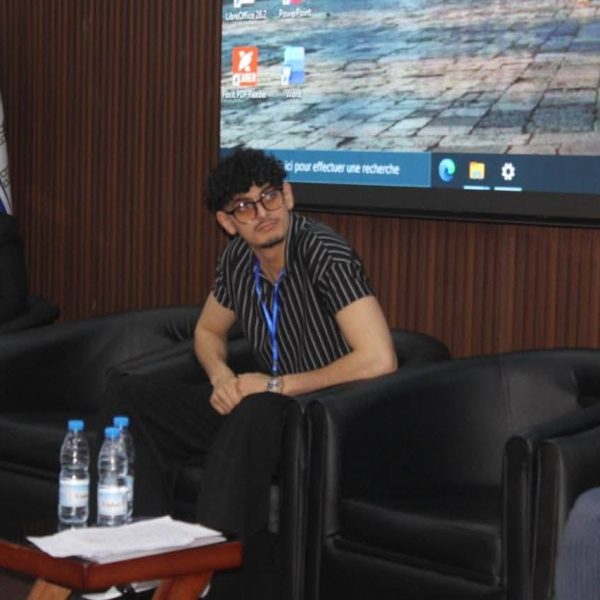
– The conference was not limited to the theoretical aspect; it extended to include interactive discussion sessions that brought together professors and student researchers. This created a bridge of communication for exchanging expertise on the safe and effective use of Artificial Intelligence tools within the university academic field.
– At the conclusion of the first day, a ceremony was held to honor the participants in recognition of their contributions to enriching the discussion on issues of digitalization and languages, as everyone looked forward to the second day's workshops and significant technical recommendations that will draw the roadmap for this digital transformation.
Conference National

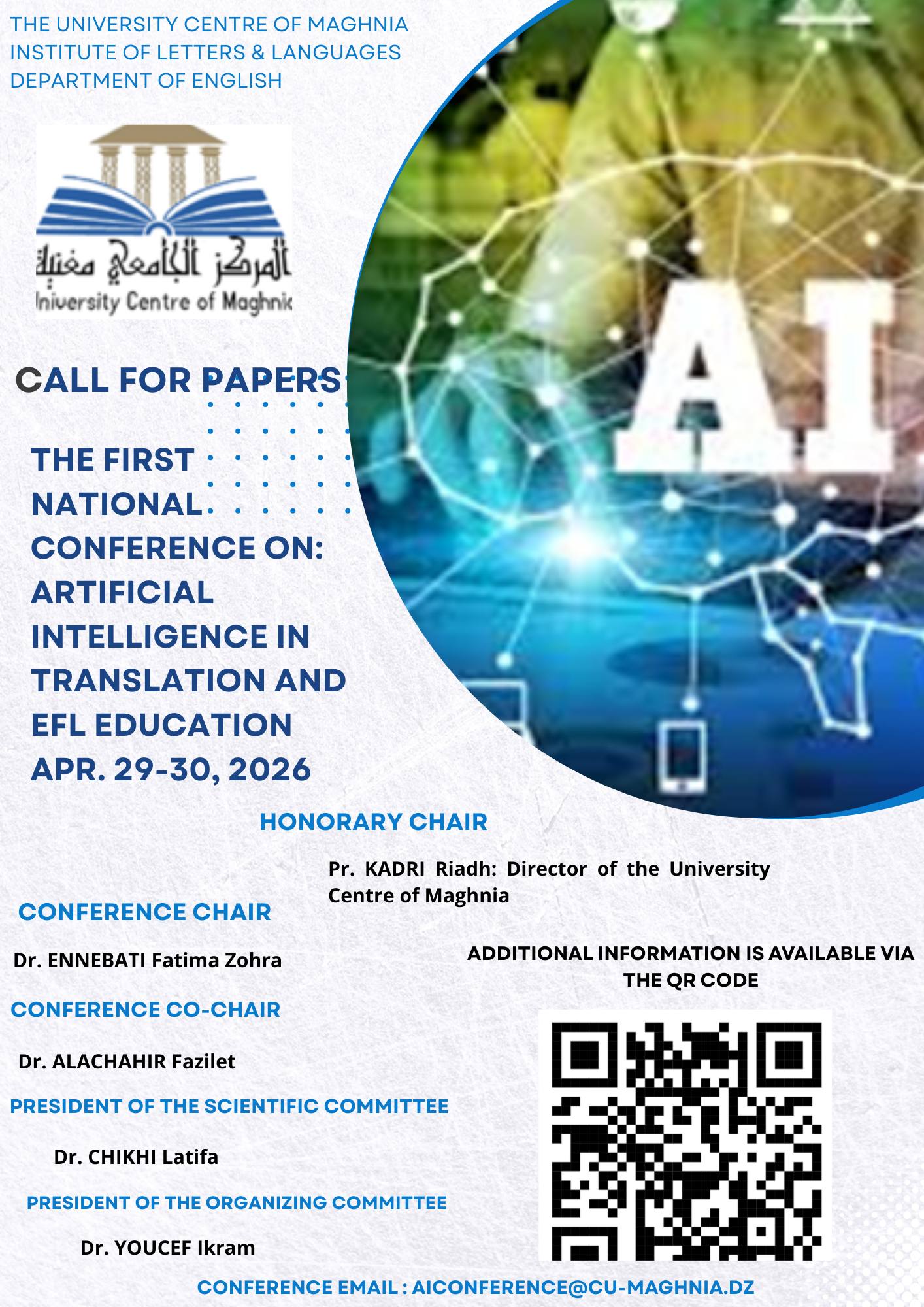
Artificial Intelligence in Translation and Teaching English as a Foreign Language
Photos of the National Conference